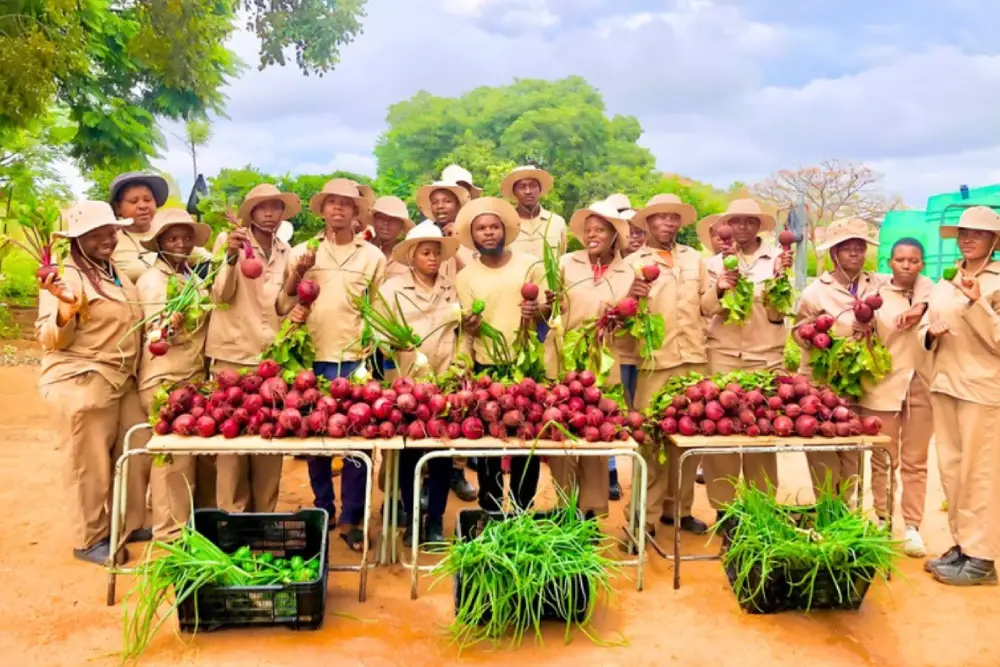
The Presidential Employment Stimulus (PES), funded by the Industrial Development Corporation (IDC). The programme aims to create meaningful work opportunities that address pressing social and environmental challenges while building pathways to sustainable livelihoods for unemployed South Africans.
As a Strategic Implementation Partner, Seriti Institute delivers SEF through its Work.Learn.Grow approach, providing participants with opportunities to engage in work that improves food security, environmental sustainability, and digital inclusion while developing practical skills, work experience, and future livelihood opportunities.
Participants are placed in community-based initiatives that contribute to local development while earning a monthly stipend and gaining access to training, mentorship, and enterprise development support.
These opportunities are designed to:
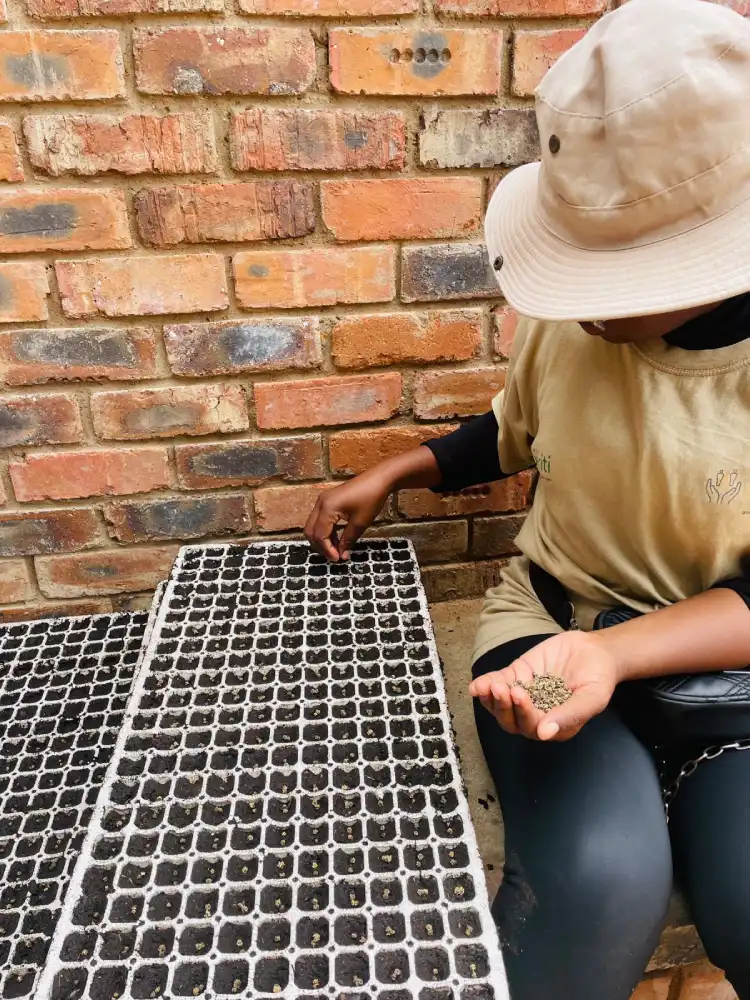


Programme Focus Areas
Participants access:
Through partnerships with organisations including Afrika Tikkun, Standard Bank, Citi Foundation, ClimateWorks Foundation, and other sector stakeholders, participants gain access to specialised learning opportunities, transition pathways, and enterprise support initiatives.
Impact
Since becoming a Strategic Implementation Partner of the Social Employment Fund in 2022, Seriti Institute has created more than 14 267 work opportunities across multiple provinces, enabling unemployed South Africans to contribute to food security, environmental sustainability, and community development while building pathways to sustainable livelihoods.
Over the past two quarters (six months), participants in the programme have achieved the following:
Recent programme achievements include the expansion of Multi-Functional Agri-Nodes in Deelpan, Standerton, and Limpopo; the establishment of new interventions in the Northern Cape; increased participant transitions into employment and cooperative enterprises; and strengthened market linkages that support sustainable, income-generating opportunities.
Through SEF, Seriti is not only creating work opportunities but also building resilient communities, strengthening local economies, and enabling participants to work, learn, and grow toward a more sustainable future.
Impact Stories

Impact Story – From Aspiring Farmer to Thriving Producer: Phindile Gogo Ndlovu’s Remarkable Journey
Phindile Gogo Ndlovu is a passionate and hardworking backyard farmer from the Tsakane informal settlement near Bela-Bela. Her journey into farming began back in 2011, when she first started growing crops in her backyard. At the time, Phindile was filled with hope and excitement, eager to cultivate her own food and perhaps turn it into a business. However, her early experiences were not as successful as she had hoped.

Impact Story – Gontse Moatshe’s Journey to Stability and Growth with SEF
Gontse Moatshe, a 24-year-old from Phomolong, Modimolle, Limpopo, has seen his life take a positive turn thanks to the Social Employment Fund (SEF). Living with his family, including his mother, three sisters, and a young nephew, Gontse has become a vital support for them.